Semiconductor Uses: From Smartphones to Smart Cities & Beyond
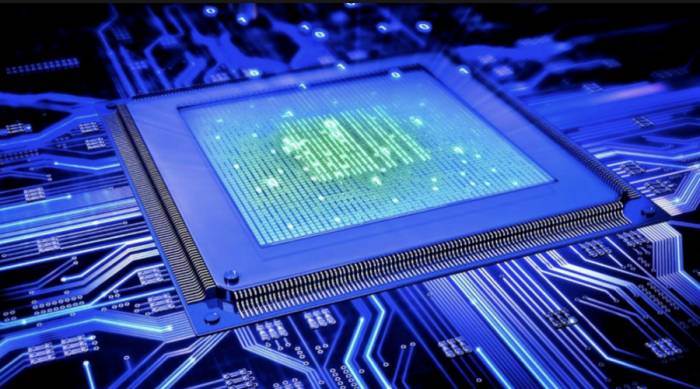
Look around. That phone in your hand, the car you might drive, the thermostat on your wall – they all have one thing in common. They’re powered by semiconductors. These tiny chips, made mostly from silicon, are the fundamental building blocks of the modern world. Calling them "computer parts" is like calling a heart just a "blood pump." It's technically true but misses the entire story of life. Semiconductors are the logic, the memory, the sensors, and the power switches for nearly every advanced technology we use today.
What’s Inside This Guide?
- How Do Semiconductors Power Modern Computing?
- The Communication Revolution: What's at the Core?
- Semiconductors in Your Car: Beyond the Engine
- The Pocket-Sized Miracle: Consumer Electronics
- Where Reliability is Everything: Industrial & Medical Uses
- Shaping Tomorrow: Semiconductors in Emerging Tech
- What Are the Most Common Semiconductor Materials?
- From Sand to System: A Peek Into Semiconductor Manufacturing
- Your Questions Answered (The Expert's Corner)
How Do Semiconductors Power Modern Computing?
This is the classic use case, but it’s evolved far beyond the desktop PC.
The Brain (CPU/GPU): The Central Processing Unit (CPU) in your laptop and the Graphics Processing Unit (GPU) in your gaming console are both dense clusters of billions of transistors (semiconductor switches). The CPU is a generalist, handling tasks sequentially. The GPU is a specialist, crushing parallel calculations for graphics, AI, and scientific modeling. The shift towards specialized chips, like Google's Tensor Processing Units (TPUs), is a huge trend. It’s not just about raw speed anymore; it’s about efficiency for specific tasks.
The Short-Term Memory (RAM): Dynamic Random-Access Memory (DRAM) chips are what your computer uses to hold active data. They’re volatile (lose data when power is off), but incredibly fast. The constant push for more RAM in devices isn’t just marketing—it directly allows you to have more apps and browser tabs open without everything slowing to a crawl.
The Long-Term Storage (NAND Flash): This is your SSD (Solid State Drive) and your phone's internal storage. Unlike old hard drives with spinning disks, NAND flash memory uses semiconductor gates to trap electrical charge, representing data. No moving parts means faster access, less power use, and better durability. The move from SATA to NVMe SSDs? That’s all about better semiconductor controllers talking faster to NAND chips.
The Communication Revolution: What's at the Core?
Every single wireless signal depends on semiconductors.
Your Wi-Fi router uses Radio Frequency (RF) semiconductors to modulate and transmit data. Your smartphone has a complex RF front-end module, a collection of specialized chips for different cellular bands (4G LTE, 5G), Bluetooth, and GPS. These chips have to be incredibly sensitive to pick up weak signals and powerful enough to transmit back, all while managing interference from other nearby devices.
The backbone of the internet—the fiber optic cables—relies on semiconductor lasers to convert electrical data into pulses of light, and photodetectors (made from materials like indium gallium arsenide) to convert that light back into electrical signals at the other end.
Think about the Internet of Things (IoT). That smart sensor in a farmer’s field measuring soil moisture? It uses a low-power microcontroller (a simple CPU with memory on one chip) and a specialized low-power wireless semiconductor, like a LoRa or NB-IoT radio, to send tiny packets of data for miles on a single battery for years.
Semiconductors in Your Car: Beyond the Engine
A modern car can have over 3,000 semiconductors. It’s not just the infotainment screen.
- Engine Control Unit (ECU): The original automotive chip. It reads data from oxygen, temperature, and pressure sensors (themselves semiconductor-based) and precisely controls fuel injection and ignition timing for efficiency and power.
- Advanced Driver-Assistance Systems (ADAS): This is where the count skyrockets. Radar sensors for adaptive cruise control, image sensor chips (CMOS) for lane-keeping and traffic sign recognition, LiDAR sensors for high-resolution 3D mapping. Each sensor system has its own processor to make sense of the raw data.
- Electric Vehicle Powertrains: This is a massive growth area. Insulated-Gate Bipolar Transistors (IGBTs) and, increasingly, Silicon Carbide (SiC) MOSFETs are used in the inverter. This critical component takes DC power from the battery and converts it to AC to drive the electric motor. SiC chips handle higher temperatures and voltages more efficiently than silicon, directly increasing driving range.
The automotive semiconductor shortage hit so hard because these aren't off-the-shelf PC chips. They are specialized, need to be certified for extreme temperatures (-40°C to 150°C+) and vibration, and have much longer product lifecycles (10-15 years). You can't just repurpose a smartphone chip for a brake controller.
The Pocket-Sized Miracle: Consumer Electronics
It’s the most visible application. Your smartphone is arguably the most complex piece of consumer semiconductor technology ever made.
It packs an application processor (a system-on-a-chip combining CPU, GPU, AI accelerator, and modem), multiple memory chips (DRAM and NAND flash), power management ICs to efficiently run off the battery, an audio codec chip, and a dozen sensors—all in a sliver of glass and metal.
But look further: Smart TVs use display driver ICs to control each individual pixel. Wireless earbuds have tiny Bluetooth chips and audio processors for noise cancellation. Game consoles rely on custom-designed, high-performance APUs (Accelerated Processing Units). Even your "dumb" appliance like a microwave or a coffee maker has a simple microcontroller managing its timing and functions.
Where Reliability is Everything: Industrial & Medical Uses
This is where specifications get tough. Factory robots use ruggedized semiconductors in their motor controllers and vision systems. Programmable Logic Controllers (PLCs), the brains of automation, are built around reliable microcontrollers and power semiconductors.
In medical tech, the stakes are even higher. Semiconductor-based sensors are inside MRI and CT scan machines. Pulse oximeters use a photodetector to measure blood oxygen. Implantable devices like pacemakers and neurostimulators use ultra-low-power, highly reliable chips with specialized packaging to survive inside the human body for decades. A failure here isn't an inconvenience; it's life-threatening. This drives an entire segment of the industry focused on extreme quality and longevity.
Shaping Tomorrow: Semiconductors in Emerging Tech
The next wave of innovation is completely dependent on new semiconductor applications.
Artificial Intelligence & Machine Learning: Training large AI models requires data centers full of specialized AI accelerator chips (like GPUs and TPUs). Running AI locally on your phone ("on-device AI") for features like live photo editing or transcription needs neural processing units (NPUs) built into the main chip.
Quantum Computing: While not based on classical silicon transistors, experimental quantum computers use superconducting circuits or trapped ions, which require incredibly precise control systems built from… you guessed it, conventional semiconductors.
Renewable Energy: Solar panels use photovoltaic cells (semiconductor junctions) to convert sunlight to electricity. The inverters that connect them to the grid use high-power semiconductors, like IGBTs and SiC MOSFETs, for efficient conversion. Better semiconductors mean more efficient solar systems and lower cost per watt.
What Are the Most Common Semiconductor Materials?
Silicon is the king, but it’s not the only player. The material choice is a constant trade-off between performance, cost, and what the application needs.
| Material | Key Properties | Primary Uses | Trade-Off |
|---|---|---|---|
| Silicon (Si) | Abundant, cheap, excellent oxide (SiO2), mature manufacturing. | Microprocessors, memory chips, most logic ICs, solar cells. | Lower electron mobility and bandgap limit speed & high-power/high-temperature performance. |
| Gallium Arsenide (GaAs) | High electron mobility, good for high-frequency signals. | RF chips for smartphones, satellite communications, some laser diodes. | More expensive, brittle, and harder to manufacture than silicon. |
| Silicon Carbide (SiC) | Wide bandgap, handles high voltage, temperature, and frequency. | Power electronics in EV inverters, industrial motor drives, fast chargers. | Significantly higher cost than silicon, but efficiency gains justify it in high-power apps. |
| Gallium Nitride (GaN) | Even wider bandgap than SiC, excellent for high-frequency switching. | Compact fast chargers, 5G RF power amplifiers, lidar systems. | Cost and manufacturing complexity are coming down, challenging SiC in some areas. |
From Sand to System: A Peek Into Semiconductor Manufacturing
It’s worth understanding how these chips are made, because it explains a lot about the industry's challenges (like the shortage). The process, known as fabrication, is mind-bogglingly complex and precise.
Purified silicon is grown into giant single-crystal ingots and sliced into ultra-thin wafers. Hundreds of identical chip designs are then patterned onto a single wafer using photolithography—a process like microscopic photography using light to etch patterns. This is repeated dozens of times, adding layers of materials to form transistors and connect them with wires thinner than a virus.
The machines that do this, like Extreme Ultraviolet (EUV) lithography scanners from a company like ASML, are among the most advanced tools ever built. A single fab can cost over $20 billion. This immense capital intensity and complexity are why there are only a handful of companies that can make the most advanced chips (TSMC, Samsung, Intel). It’s not something you can spin up in a garage.
Your Questions Answered (The Expert's Corner)
How do I choose the right microcontroller for my IoT project?
Don't just look at clock speed and memory. The first filter should be power consumption. Is it battery-powered for years? Look for microcontrollers with deep sleep modes measured in nanoamps. Second, what peripherals do you need built-in? Wi-Fi/Bluetooth? Analog-to-digital converters for sensors? Choosing one with the right peripherals saves you extra components and board space. Third, consider the software ecosystem and community support. A chip with abundant libraries and forums will save you months of headaches. I've seen projects stall because the team chose a "powerful" chip with zero driver support for their sensor.
Why was the automotive industry hit harder during the chip shortage than smartphone makers?
Two main reasons. First, purchasing power and relationships. Smartphone companies like Apple buy in such vast, predictable volumes that they have long-term agreements and top priority at fabs. Automotive companies traditionally used a just-in-time inventory model for cheaper, older chips and had less leverage. Second, specification. A car chip needs to work from -40°C to 150°C for 15 years. You can't easily substitute a commercial-grade chip rated for 0-70°C. Rerunning qualification tests for a new chip or fab can take 12-18 months, creating a massive bottleneck when supply dried up.
How do semiconductors affect my device's battery life?
Directly and profoundly. The power management IC (PMIC) is an unsung hero. It's a semiconductor that intelligently regulates voltage from the battery to different parts of the device, minimizing waste as heat. More advanced process nodes (like 5nm, 3nm) pack transistors closer together, which generally reduces the power needed to switch them. Specialized low-power cores in modern CPUs handle background tasks while the high-performance cores sleep. Every component, from the display driver to the modem, has power-saving features managed at the semiconductor level. A 10% improvement in chip efficiency can translate to a much longer perceived battery life.
Is AI really changing how semiconductors are designed?
Absolutely, and it's a feedback loop. We need new chips (GPUs, NPUs) to run AI, and now we're using AI to design those chips. The placement of billions of transistors and wires on a chip floorplan is a problem with more possible configurations than atoms in the universe. Companies like Google and Nvidia are using machine learning algorithms to explore this design space and find layouts that are faster, smaller, and more power-efficient than what human engineers could conceive in a reasonable time. AI is becoming a core tool in the Electronic Design Automation (EDA) software suite.

Comments
Share your experience