How to Cook Risotto: Creamy Without Constant Stirring
What I'll walk you through (no fluff):
- Why your risotto turns gluey (it's not the rice)
- The exact how to cook risotto method I use
- Heat, stock, and stirring—the numbers that matter
- 5 mistakes I see even experienced cooks make
- Risotto troubleshooting: fix it before serving
- Two variations from my kitchen
- Smart questions (and non-obvious answers)
Why your risotto turns gluey (it's not the rice)
I've watched dozens of people try to cook risotto in my own kitchen. Friends, family, that one neighbor who insists on high heat for everything. The ones who fail almost always do the same thing: they treat stirring like a punishment from a cooking god. They stand there, sweat on their brow, stirring nonstop for 20 minutes, and then wonder why the rice looks like oatmeal.
Here's what I learned after ten years of cooking risotto at least twice a month—and after burning a few batches myself: you don't need to stir constantly. What you need is the right rice, a hot pan, and a stock that's actually hot before it hits the rice. The stirring myth is just that. A myth. In fact, too much stirring breaks down the starch so aggressively that you end up with glue.
In a classic risotto, you stir enough to keep the rice from sticking and to help the starch release gradually. I stir every 30 to 45 seconds, not every 5. That's the first thing I'd fix if you told me your risotto is mushy.
The exact how to cook risotto method I use
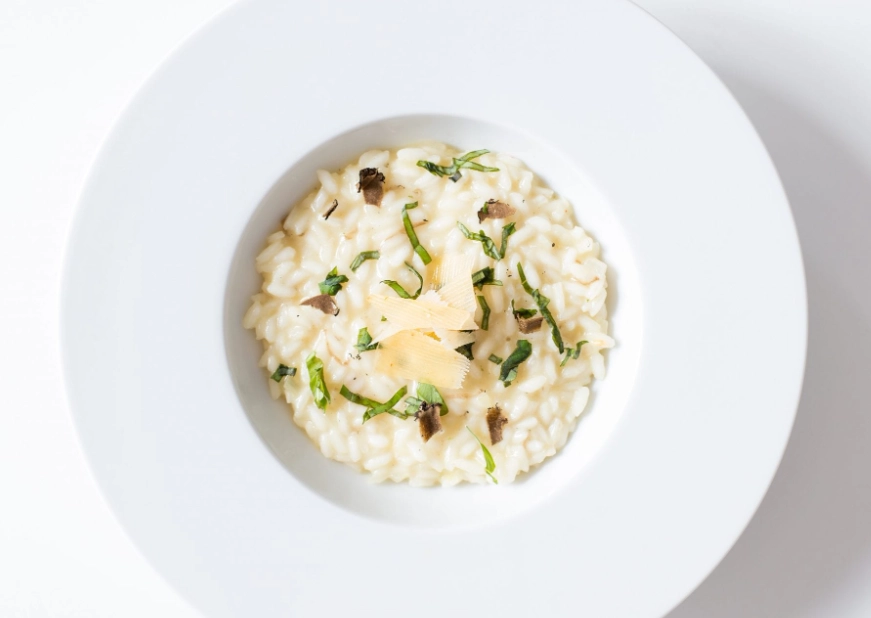
This is the backbone of every risotto I make, whether it's a plain parmesan or a mushroom-heavy one. Yields a creamy, slightly al dente risotto for two people as a main course.
What you need
You'll want a 10-inch stainless steel or enameled cast iron pan with high sides. Nonstick won't give you the brown bits that build flavor. Use a wooden spoon, not a whisk. A whisk overworks the rice.
Ingredients:
- 1 cup carnaroli or arborio rice (carnaroli holds up better, but arborio is fine)
- 4 cups low-sodium chicken or vegetable stock, kept hot
- 1 small onion, minced fine (about 1/2 cup)
- 3 tablespoons unsalted butter, divided
- 1/2 cup dry white wine (pinot grigio works well)
- 1/3 cup grated parmigiano-reggiano, plus extra for serving
- Salt to taste—go easy, the stock and cheese bring salt
Step-by-step (this is the part you bookmark)
1. Heat the stock and keep it hot. I use a separate saucepan over low heat. If you add cold stock to a hot pan, the rice temperature drops and the cooking stalls. That's when the grains start to break. Aim for the stock to be just below a simmer—small bubbles at the edge, not rolling.
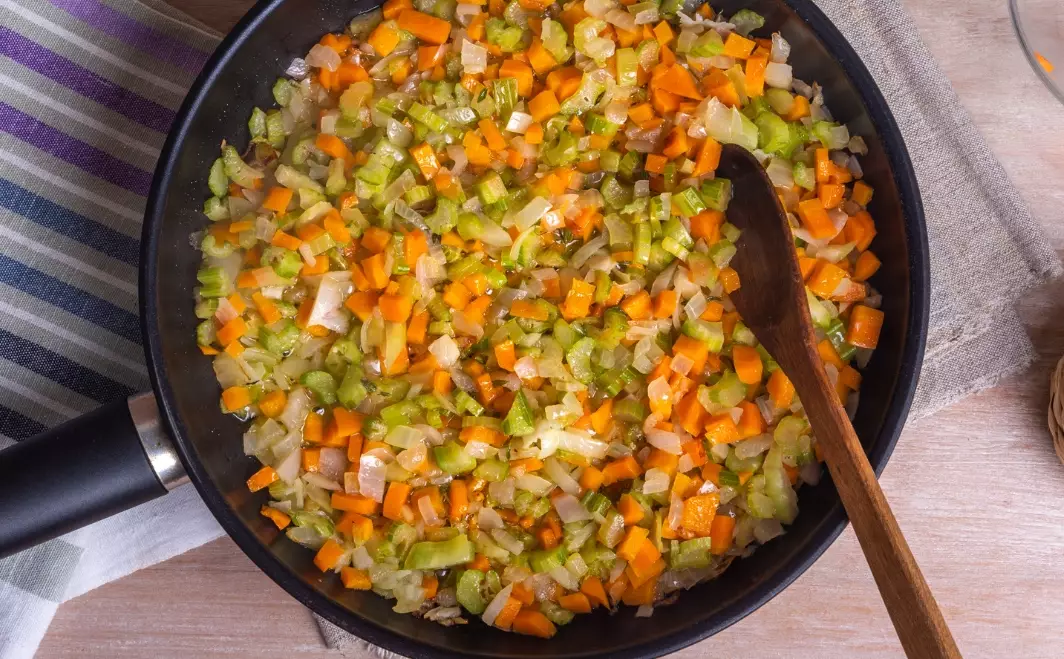
2. Sweat the onion. Melt 2 tablespoons of butter in the pan over medium heat. Add the onion. Cook until translucent, not brown—about 4 minutes. If you see browning, drop the heat. Browned onions add a strong, almost sweet flavor that fights with the parmesan.
3. Toast the rice. Add the rice and stir for 2 minutes. You want the grains to look slightly translucent at the edges but still white in the center. This step builds a barrier that controls how fast starch releases. Skip it and you'll get a starchy soup.
4. Add the wine. Pour in the wine, stir once, and wait until it's almost fully absorbed—about 2 minutes. The alcohol cooks off, leaving a little acidity that cuts the richness of the butter and cheese.
5. Add stock one ladle at a time. Add enough hot stock to just cover the rice, no more. Stir once, then wait. When you can drag the spoon across the pan and see the bottom for a second before the liquid rushes back, add the next ladle. This takes about 18 to 20 minutes total. I usually end up adding stock every 3 to 4 minutes.
6. Taste early, taste often. Start checking the rice at the 15-minute mark. You're looking for risotto that's cooked through but with a slight bite in the center—al dente, like good pasta.
7. The mantecatura. Kill the heat. Add the remaining 1 tablespoon of butter and all the parmesan. Stir hard for about 30 seconds. This is the only moment you stir aggressively. It emulsifies the fat with the starch, and that's what creates the famous creaminess. Let it rest for 1 minute before serving.
Heat, stock, and stirring—the numbers that matter
I've tested risotto with different ratios so many times. Here's a table I keep taped inside a kitchen cabinet.
| Variable | My target | Why it matters | What goes wrong otherwise |
|---|---|---|---|
| Rice to stock | 1 cup rice : 3.5 to 4 cups stock | Gives enough liquid for 18-20 min cooking without flooding | Too much stock: boiling, mushy rice. Too little: scorched bottom, undercooked center. |
| Stock temperature | 185°F (85°C) | Keeps the pan at a gentle simmer when you add it | Cold stock stops the cooking and makes the rice absorb unevenly. |
| Stirring frequency | Every 30-45 seconds | Releases starch gradually, prevents sticking | Constant stirring = glue. Zero stirring = burnt bottom. |
| Pan heat | Medium (on my induction, that's setting 5 of 10) | Maintains a slow, steady bubble | High heat evaporates liquid faster than the rice can absorb it. |
I also keep the rice-to-stock ratio in mind when adding vegetables. A cup of sliced mushrooms absorbs about 1/4 cup of stock, so I add that extra. If you're adding frozen peas, add them in the last 3 minutes and no extra stock needed.
5 mistakes I see even experienced cooks make
Mistake 1: Using cold stock from the start. I get it—you want to save a pot. But that cold liquid is the reason your rice cooks unevenly. I always start heating the stock before I chop the onion. By the time the rice goes in, the stock is hot and ready.
Mistake 2: Over-stirring because you're bored. You don't need to stir constantly. Stand near the pan, sure, but use your spoon every 30 seconds or so. The rice needs time to absorb the stock. Let it.
Mistake 3: Adding all the stock at once. Dump in 4 cups of stock and you've made rice porridge. Add it in ladles. This is not a slow-cooker recipe.
Mistake 4: Skipping the wine. I've heard people say the wine doesn't matter. It does. The acidity balances the butter and cheese, and the alcohol helps release flavor compounds from the rice. If you can't have alcohol, use a tablespoon of lemon juice mixed with a quarter cup of stock instead.
Mistake 5: Not resting after mantecatura. The one-minute rest lets the starch and fat settle. Serve immediately and you lose some of that creaminess to the plate. Wait 60 seconds. I promise you'll notice.
Risotto troubleshooting: fix it before serving
I keep a small notebook in my kitchen for risotto failures. It's not a long list, but it's honest.
Another fix: if your risotto tastes flat but salty, you probably used a stock with too much sodium. I keep two kinds of stock on hand—one with salt for savory dishes, one unsalted for risotto. It's a small investment that pays off.
Two variations from my kitchen
Mushroom risotto with thyme. I use 8 ounces of cremini mushrooms, sliced, sautéed in a separate pan with a tablespoon of butter until they're deeply browned. Add them along with the last ladle of stock. A teaspoon of fresh thyme goes in at the same time. The mushrooms absorb some liquid, so be ready to add a bit more stock toward the end. This one's my go-to on rainy Sundays.
Lemon-pea risotto. Skip the parmesan. In the last 3 minutes, stir in 1 cup of frozen peas and the zest of one lemon. Finish with a tablespoon of unsalted butter and a squeeze of lemon juice. This version is lighter and works well next to roasted fish. I learned this from a cook at a small trattoria in Bologna who said her grandmother made it every spring. I mentioned this to a friend who grew up in Modena, and she said her family made something similar with fresh fava beans instead of peas. Same principle.
Smart questions (and non-obvious answers)
I'm hosting a dinner party. Can I make risotto ahead of time without it turning gluey?
Yes, but you need to stop it early. Cook the risotto until it's about 80% done—still a bit too firm to eat. Spread it on a baking sheet in a thin layer and cool it quickly (I put mine in front of a fan for 10 minutes). At serving time, return it to a pan with hot stock and finish cooking. It won't be identical to a freshly made batch, but it's close. I've done this for a party of six and nobody complained.
How do I get risotto to taste better when I'm using a mediocre stock?
Add a parmesan rind to the stock while you're heating it. Then, in the last two minutes of cooking, stir in a teaspoon of miso paste or a dash of soy sauce—just a little. It deepens the flavor without making it taste Asian. I know that sounds strange, but it's a trick I picked up from a chef who ran out of high-quality parmesan on a busy night. The miso flavor disappears into the background.
Why does my risotto keep sticking to the bottom of the pan even when I stir?
Your heat is too high. I see this a lot—people think more heat means faster cooking. Risotto needs a gentle, steady simmer. I set my gas burner to medium-low (around the 4 o'clock mark) and never go above that. Also, make sure the pan is thick-bottomed. A thin aluminum pan will create hot spots that burn the rice no matter how much you stir.
Can I use brown rice or short-grain rice like sushi rice for risotto?
Sushi rice? The kernels are too starchy. I tried it once and it turned into a pudding. Brown rice works if you adjust the cooking time—it takes about 40 minutes and you'll need closer to 5 cups of stock. The texture is different (nutty, less creamy), but some people prefer it. It's a different dish, not a substitute. If you want the real deal, stick with carnaroli or arborio. Vialone nano is also good if you can find it—it's a bit more toothsome and works for wetter risottos.
I've made risotto maybe 300 times in the last decade. The mistakes I made in my first year were mostly about control—I thought I had to do everything at once. Now I let the pan do most of the work. You will too. The first batch might be gluey. The second one will be better. By the third, you'll have your own rhythm.
Fact-checked against the Italian Rice Association (Ente Nazionale Risi) cooking guidelines and the BBC Good Food risotto technique pages.


Comments
Share your experience