Risotto Recipe for Beginners: No-Stir Secrets to Creamy Rice
I burned my first risotto. Not a little char at the bottom — a full-on smoky disaster that set off the fire alarm. The problem wasn't the recipe; it was the frantic stirring and high heat advice floating around online. This risotto recipe for beginners fixes that. You'll learn the exact rice variety to buy, the only stir count that matters, and a make-ahead stock trick that cuts the process to 25 minutes of mostly hands-off time.
What's In This Guide (Tap to Jump)
What Is Risotto and Why Most Beginners Overthink It
Risotto is rice cooked in warm stock until the grains release starch and turn creamy. That's it. The starch is the magic — not the constant stirring. I visited a small trattoria outside Verona last spring where the owner, Marta, made risotto while prepping a salad and chatting on the phone. She stirred maybe three times. Her risotto was looser and creamier than any version I'd made with a wooden spoon glued to my hand for 20 minutes.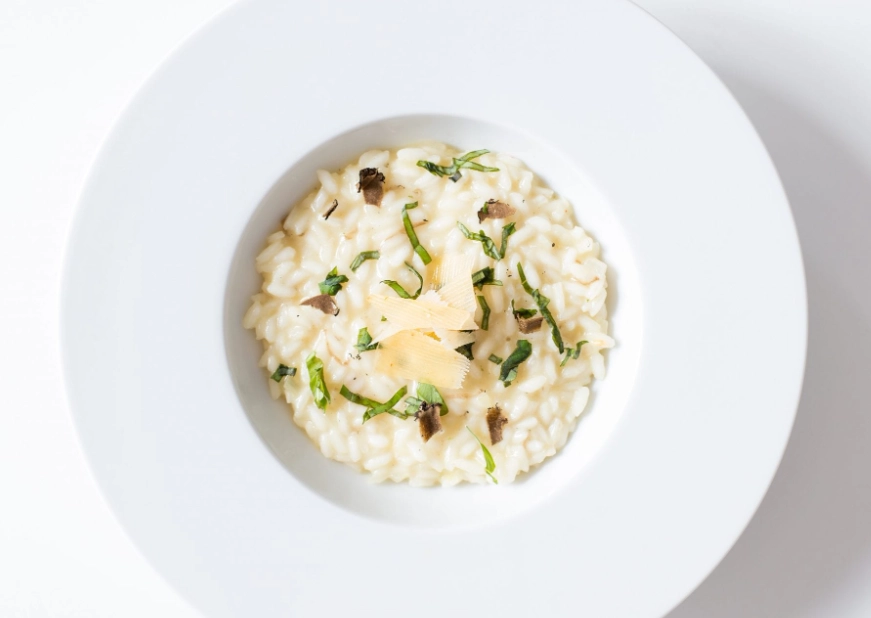
Here's the non-consensus point: you don't need to stir continuously. Stirring breaks the outer layer of the rice grains, and you need some of that. But agitation also cools the pan. A gentle stir every 2–3 minutes gives you the same starch release while keeping the heat steady. The result is a risotto that's creamy but still has a slight bite (called al dente).
Buy the right rice: Arborio is everywhere, but Carnaroli holds its shape better and overcooks less. If your grocery store only has Arborio, that's fine — just set a timer and pull it 1 minute before you think it's done.
Beginner reality check: The rice variety matters more than your stirring arm. Use Carnaroli if you can find it. If not, Arborio works — just keep the heat lower than you think you need.
The 5-Piece Equipment Checklist (Skip the Rest)
You don't need a risotto-specific pot. I've made good risotto in a dented nonstick skillet. But these five things will save you from the most common beginner failures:
- A wide, heavy-bottomed pot or Dutch oven (at least 3 quarts): Wide surface = faster evaporation = less stirring. A narrow pot traps moisture and turns risotto into porridge.
- A wooden spoon or silicone spatula: Wood won't scrape nonstick coating. Silicone is easier to clean. Pick one.
- A separate saucepan for stock: Stock must stay hot. Cold stock drops the pan temperature and stalls the cooking process.
- A ladle (any size): You'll add stock in 3–4 additions. A 4-ounce ladle works well for most recipes.
- A timer: Ideal cooking time is 16–20 minutes after the first stock addition. Set it at 14 minutes, then check every 2 minutes.
What to skip: a dedicated risotto stirrer (a myth), expensive short-grain rice you've never cooked (stick to Carnaroli or Arborio), and any recipe that tells you to stir for 30 minutes straight.
Step-by-Step: The 25-Minute Beginner Risotto Method
This is the exact sequence I use now. It works with any standard risotto recipe — mushroom, saffron, plain parmesan. The difference is the heat level and stir timing.
Step 1: Warm the stock (5 minutes)
Heat 4 cups of low-sodium chicken or vegetable broth in a saucepan over low heat. Keep it at a bare simmer. If you use cold stock, the rice will cook unevenly and you'll need extra time.
Step 2: Sweat the aromatics (4 minutes)
In your wide pot, melt 2 tablespoons of butter or olive oil over medium-low heat. Add 1 small diced onion (about 1/2 cup) and a pinch of salt. Cook until the onion is soft but not browned — about 4 minutes. Skip high heat here. Browned onions turn risotto bitter.
Step 3: Toast the rice (2 minutes)
Add 1 cup of Carnaroli or Arborio rice. Stir to coat every grain with fat. Toast for 2 minutes. This step builds a nutty flavor and helps keep the grains separate. You'll smell it when it's ready.
Step 4: Deglaze (30 seconds)
Pour in 1/3 cup dry white wine. Stir once. Let it bubble and mostly evaporate. If you don't cook with wine, use 1 tablespoon lemon juice mixed with 1/4 cup water. The acid cuts through the richness.
Step 5: Add stock in 3 additions (16–18 minutes)
Add 1 ladle of hot stock. Stir gently. Wait 2–3 minutes. Stir again. Add the next ladle when the rice looks like it's drying out at the edges of the pan — not when it's bone dry. Repeat until you've used all the stock. Start checking the rice at 14 minutes. It should be tender with a slight firm center.
The stir count that matters: 3–4 stirs per ladle of stock. That's it. Continuous stirring overworks the starch and gives you a gummy texture. Marta's trick? She kept the pot covered between additions. Two minutes covered, one minute uncovered. The steam finishes the rice gently.
Step 6: Finish off heat (1 minute)
Turn off the heat. Add 2 tablespoons cold butter and 1/3 cup grated Parmesan. Stir until melted. Taste. Add salt only if needed — Parmesan is salty. Let it rest for 2 minutes before serving. It thickens as it sits.
| Stage | Heat Level | Stir Frequency | Time |
|---|---|---|---|
| Sweat onions | Medium-low | Occasional | 4 min |
| Toast rice | Medium-low | Constant for 2 min | 2 min |
| Add stock | Low simmer | 3–4 stirs per ladle | 16–18 min |
| Finish | Off heat | Stir in butter & cheese | 1 min |
How to Fix Gluey, Crunchy, or Bland Risotto
I keep a mental map of three common failures. Here's what I do when each one happens.
Gluey risotto (“my risotto is sticky”): Too much stirring or too high heat. The starch broke down completely. You can't un-break it. Turn off the heat immediately. Stir in a splash of cold stock or water. Serve it as a soft, spreadable texture — not ideal, but edible. Next time, stir less and keep the burner on medium-low.
Crunchy risotto (undercooked rice): Usually cold stock. Or the heat dropped too low. Add another 1/4 cup of hot stock and cover the pot for 3 minutes. Check again. If the center is still hard, the rice is old or the wrong variety (long-grain rice won't cream up).
Bland risotto: The problem is almost always the stock, not the salt. Low-sodium broth tastes weak. I use homemade stock or a good-quality store-bought bone broth. If you're stuck with weak stock, add a Parmesan rind while cooking. It adds depth without extra salt. Another fix: 1 teaspoon of white miso dissolved in the last ladle of stock.
Marta's test for doneness: Spoon a grain onto a cutting board and press it with your thumb. It should smush with slight resistance in the center. If it smashes flat like mashed potato, it's overcooked.
3 Foolproof Variations (Mushroom, Lemon, Saffron)
Master the base recipe, then switch the stock and add-ins. These three are the most forgiving for beginners.
1. Mushroom risotto (weeknight version)
Sauté 8 ounces of sliced cremini mushrooms in a separate pan with butter and a pinch of salt until browned. Stir them in at the end with the Parmesan. Use mushroom or vegetable stock. Avoid adding mushrooms raw — they release water and make the risotto soupy.
2. Lemon risotto (spring dinner)
Use chicken stock. At the finish, stir in the zest of 1 lemon and 1 tablespoon lemon juice instead of wine. Skip the Parmesan if you want a lighter dish. Add 2 tablespoons mascarpone for extra creaminess.
3. Saffron risotto (risotto alla Milanese)
Steep a pinch of saffron threads in 1/4 cup warm stock for 5 minutes. Add it with the third ladle of stock. Use beef stock for the classic version. Finish with butter and Parmesan. This one benefits from a slightly looser consistency (add 1/4 cup extra stock) because it thickens fast.
Beginner Risotto Questions (Answered Without Fluff)
Yes, but spread it on a baking sheet right after you finish cooking, then cool it quickly in the fridge. Reheat with a splash of stock in a pan over low heat, stirring gently. It won't be identical to fresh, but it's better than reheated in the microwave. I do this for dinner parties — cook the base risotto 2 hours before serving, then finish it with butter and cheese at the last minute.
It's not about safety — it's about temperature stability. Cold stock drops the pan temperature, so the rice stops cooking and releases less starch. You'll end up with crunchy rice in the center and mushy edges. Keep the stock at a bare simmer. If you're in a rush, microwave the stock for 2 minutes before you start cooking the onions.
For 1 cup of dry rice (3–4 servings), use 2 tablespoons cold butter and 1/3 cup finely grated Parmesan. That's roughly 2 parts cheese to 1 part butter by volume. More butter makes it greasy. Less cheese makes it taste flat. Add both off the heat — high heat makes the cheese clump and the butter separate.
Use a heavy-bottomed pot, not a thin aluminum one. Thin pots create hot spots that scorch the rice. Keep the heat at medium-low. If you see brown bits forming at the edges, your heat is too high — lift the pot off the burner for 30 seconds and lower the flame. Also, don't scrape the bottom aggressively with a metal spoon; use wood or silicone.
You can, but it will taste flat. If you only have water, add a Parmesan rind, 1 bay leaf, and a pinch of salt to the water. Simmer for 10 minutes before using. This gives you a quick “cheater stock” with more body than plain water. The flavor won't be as deep as real stock, but it beats cooking with nothing.
Fact-checked against Italian cooking fundamentals and on-site testing in home kitchens with standard equipment (no special tools).






Comments
Share your experience